Behaviour Support Outreach Team
The Baycrest Behaviour Support Outreach Team helps older adults who are experiencing responsive behaviours caused by a neurological condition or brain injury.
Responsive behaviours are often responses to feeling frustrated or confused and can include:
- Physical behaviour like hitting or throwing things
- Verbal behaviour like cursing or repeating themselves
- Becoming withdrawn
- Hallucinations
- Making noises
- Wandering
- Restlessness
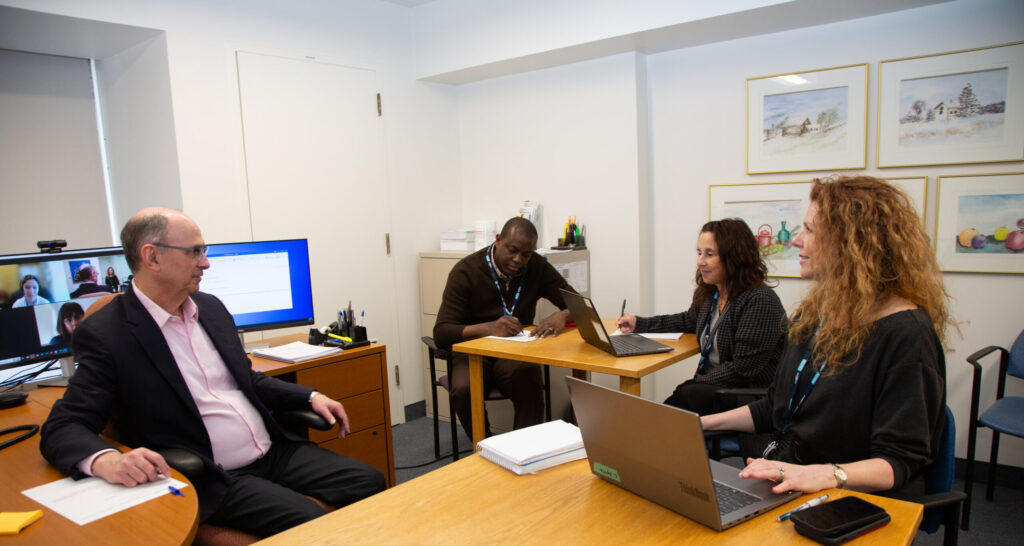
Our interprofessional team includes nurse practitioners, clinical nurse specialists, master level clinicians, registered nurses, an addiction specialist and personal support workers.
We provide outreach support to older adults who may have neurocognitive disorders like dementia or Alzheimer’s disease. They may also have other mental health or neurological conditions.
Our clients may be living at home (including shelters and supportive housing), in retirement homes, in long-term care homes, in Baycrest Hospital or in a transition unit.
Baycrest is the health services lead for the Toronto Ontario Health Behavioural Support Ontario. We work with many community partners to provide care.
“Baycrest’s outreach team is one of the few senior specific health-care services providing support to clients living with dementia directly within their homes. Our multi-disciplinary team is grounded in person-centered care, which places quality of life, aging with dignity and client safety at the forefront of all we do.”
– Simonne Cumberbatch, Occupational Therapist
Learn more
Members of our team can visit you wherever you are living, through virtual appointments or a combination of the two.
Our program runs from eight to 12 weeks and includes multiple follow-up visits as needed.
At our first visit, we will meet with you and a family or caregiver and ask questions to perform an in-depth assessment. We will work with you to develop a plan to help you manage your behaviour.
We will focus on using strategies that do not rely on medication. They may include any of the following:
- Communication strategies such as distraction or reassurance
- Changes to the surroundings like adjusting the temperature or lighting
- Therapeutic or recreational activities
We can also connect you to the following Baycrest services, if needed:
- Rapid in-home assessments following an emergency department visit
- Addiction support for older adults in or transitioning to long-term care
- Our in-hospital Transitional Behavioural Support Unit for help stabilizing unmanageable behaviours
- OHIP card or other health insurance information
- A list of your medications and supplements
- A list of questions you want to ask
- Any reports or notes from other specialists, if available
You need a referral from a health-care provider to access this program. Services provided by the Behaviour Support Outreach Team are covered by OHIP for those with a referral from a health-care provider.
Please send this referral form (PDF) to [email protected] or fax to 647-788-4883.
Eligibility requirements are listed on the referral form. For more detailed information, please visit Behavioural Supports Ontario.
Who is eligible for Behaviour Support Outreach Team services?
This service is for older adults experiencing challenging behaviours due to conditions such as dementia, mental health disorders, neurological conditions or brain injuries. They can be living at home, in long-term care homes, or in hospitals and transition units within the Toronto Central region.
Is there a cost?
Behaviour Support Outreach Team services are covered by OHIP for those with a referral from a health-care provider. See our referral information to learn more about getting a referral.
Are services available virtually?
Yes, our team offers both in-person home visits and virtual visits. You can choose to have some or all of your appointments virtually.
Contact
Phone: 416-785-2500 ext. 2005
Toll Free: 1-844-785-2500
Email: [email protected]