
The Virtual Behavioural Medicine (VBM) Program
The Virtual Behavioural Medicine Program
The Virtual Behavioural Medicine (VBM) Program is a collaboration between the Sam and Ida Ross Memory Clinic at the Pamela and Paul Austin Centre for Neurology and Behavioural Support at Baycrest, and the Toronto Central Behavioural Support for Seniors Program (TC-BSSP).

Virtual Behavioural Medicine for Health-Care Providers
Virtual Behavioural Medicine offers virtual neuropsychiatric support to health-care providers managing challenging and aggressive behaviours in people living with dementia.
Learn More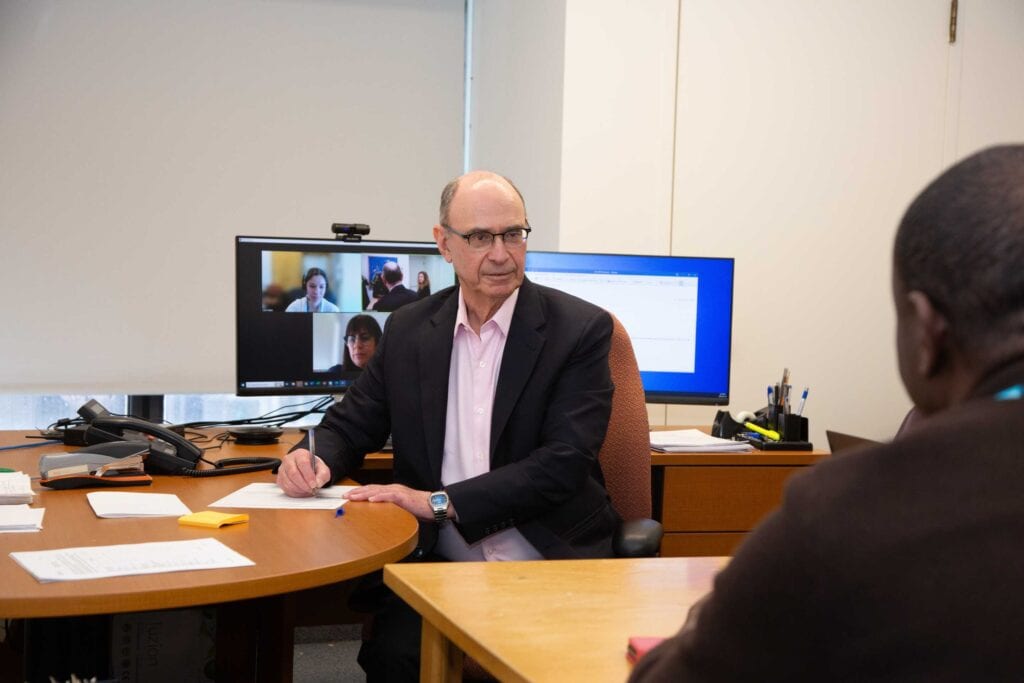
Virtual Behavioural Medicine Program for Families and Caregivers
The Virtual Behavioural Medicine program helps families and care teams manage challenging dementia-related behaviours.
Learn MoreWhat is VBM?
Using pharmacological and non-pharmacological expertise, VBM provides support in the management of challenging dementia related responsive behaviours, such as physical and verbal aggression, agitation, hallucinations and paranoia. This service is designed to be a short-term consultation service and is completely virtual, delivered using the Ontario Telemedicine Network (OTN).
Dr. Morris Freedman, Head of Division of Neurology at Baycrest walks through the VBM program.
Who Makes Up the VBM Interprofessional Team?
Providing a rapid response when needed, the VBM team works closely with care teams and specialized geriatric services in acute care hospitals, long-term care homes and with family members in the community. The VBM Program specialists include:
- Behavioural neurologists
- Neuro-psychiatrists
- Nurses
- Pharmacists
- Mental health professionals
- Behaviour Supports Ontario team members
Additional Resources
- Baycrest’s Virtual Behavioural Medicine Program
- Virtual dementia care and the challenges of the COVID-19 pandemic
- Virtual access to specialists improves care for people living with dementia
- Campbellford Memorial Hospital in Trent Hills partners with Baycrest in aim to enhance dementia care | kawarthaNOW
- Effective online supports help navigate behaviours in dementia
- VBM Newsletter Spring 2025