Virtual Behavioural Medicine Program for Families and Caregivers
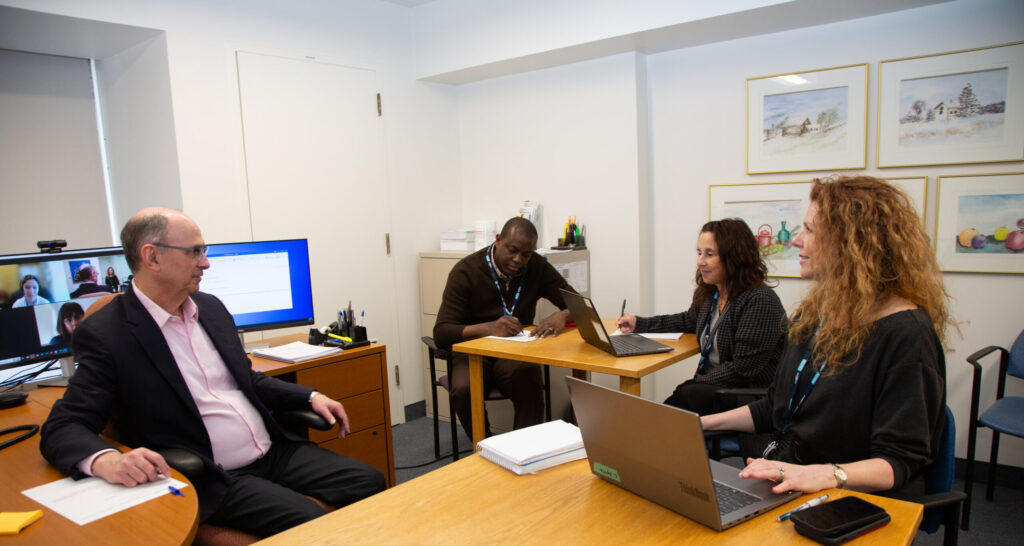
The Virtual Behavioural Medicine (VBM) program helps people living with dementia and their care teams or family members. We help them manage dementia-related behaviours that put themselves or others at risk.
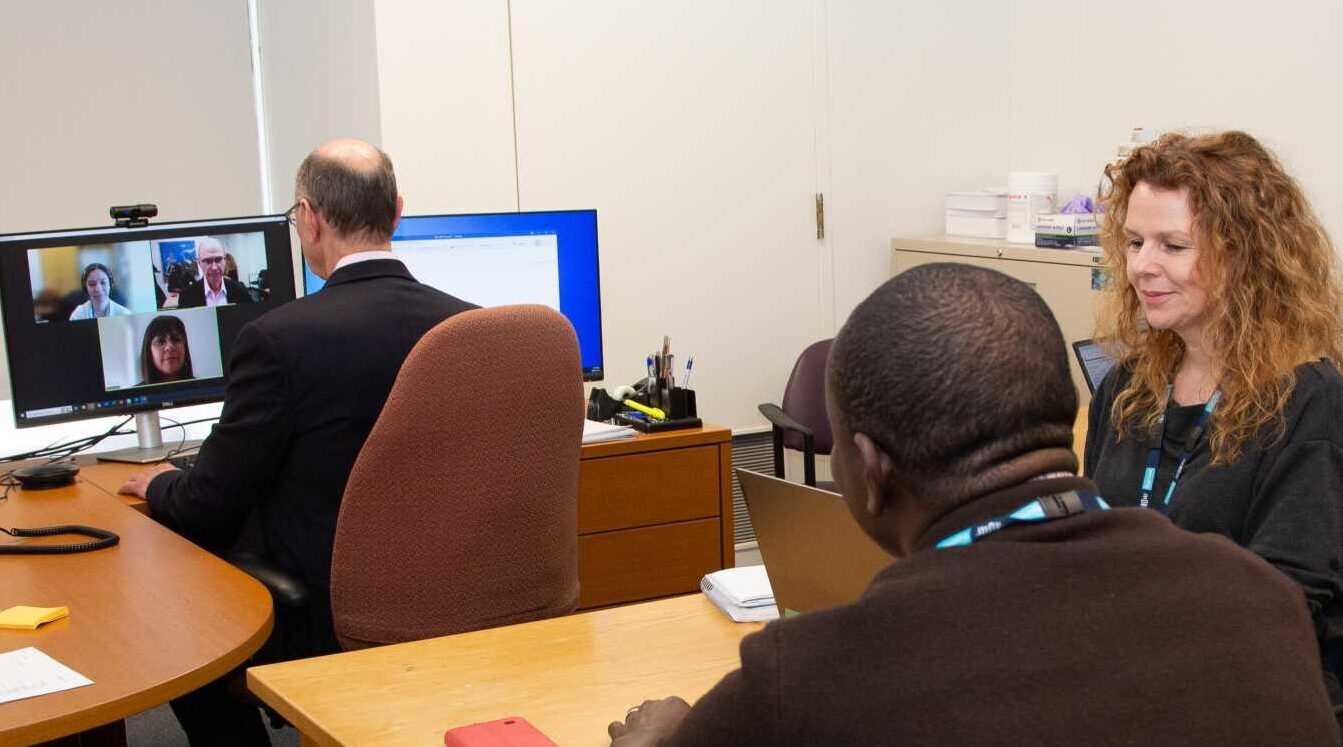
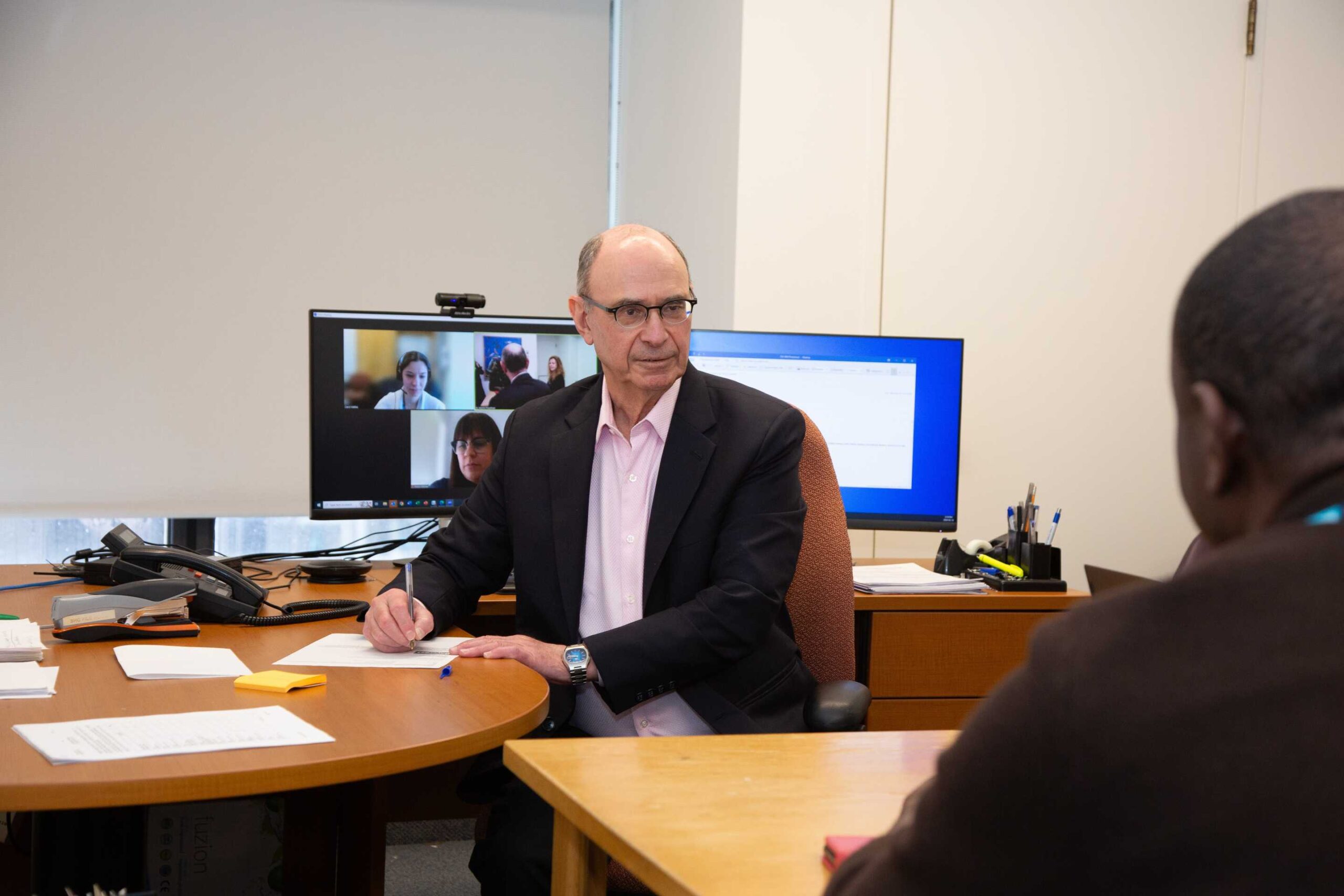
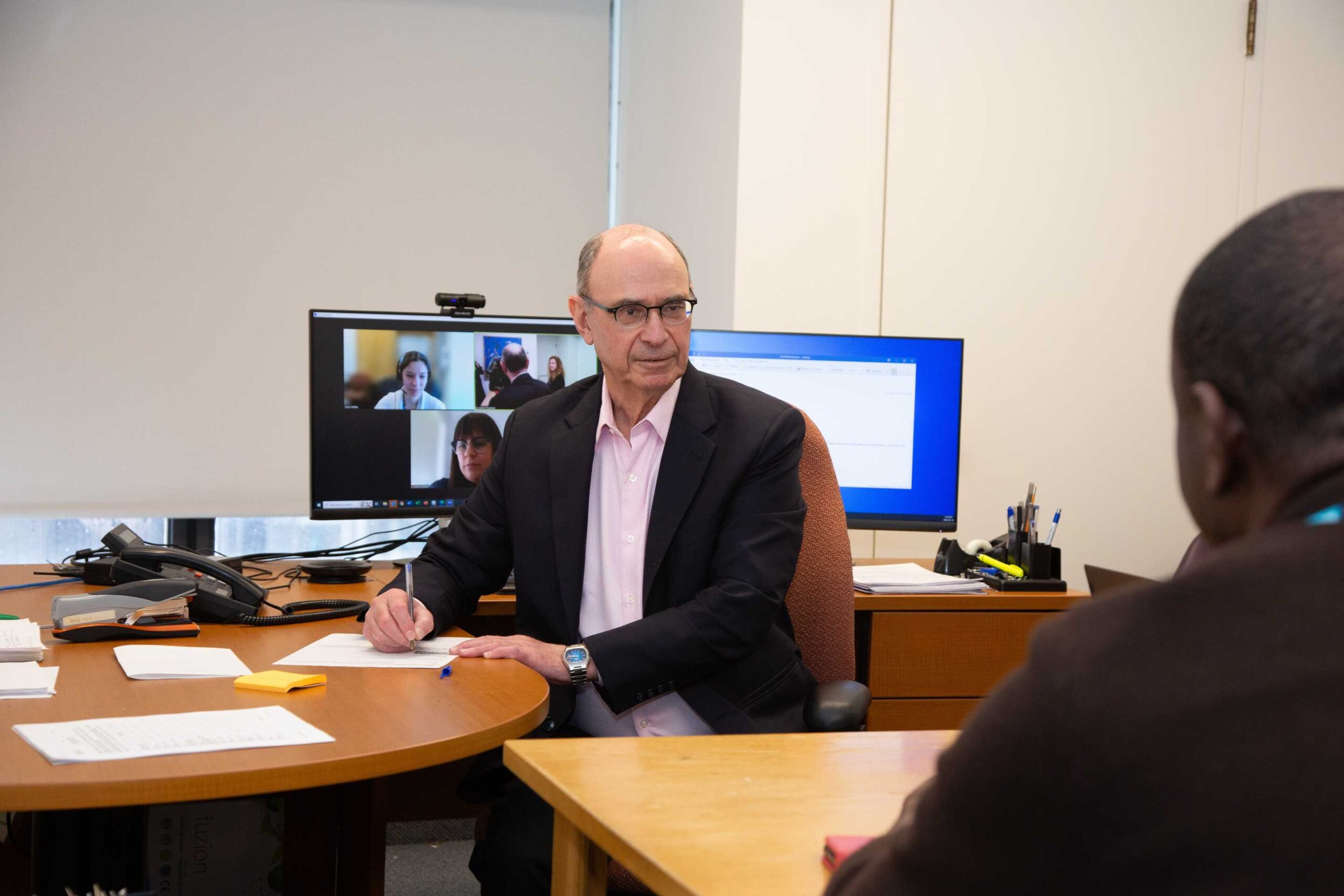
We offer rapid-access virtual appointments to people in acute care hospitals, long-term care or the wider community. We use medication and other strategies to help people who may be experiencing:
- Physical or verbal aggression
- Agitation
- Hallucinations and paranoia
- Other behaviours that can harm themselves or others
Our interprofessional team includes behavioural neurologists, geriatric psychiatrists, nurse practitioners, registered nurses, pharmacists, social workers and occupational therapists.
Learn more about the program in our VBM e-Learning Course for families and caregivers.
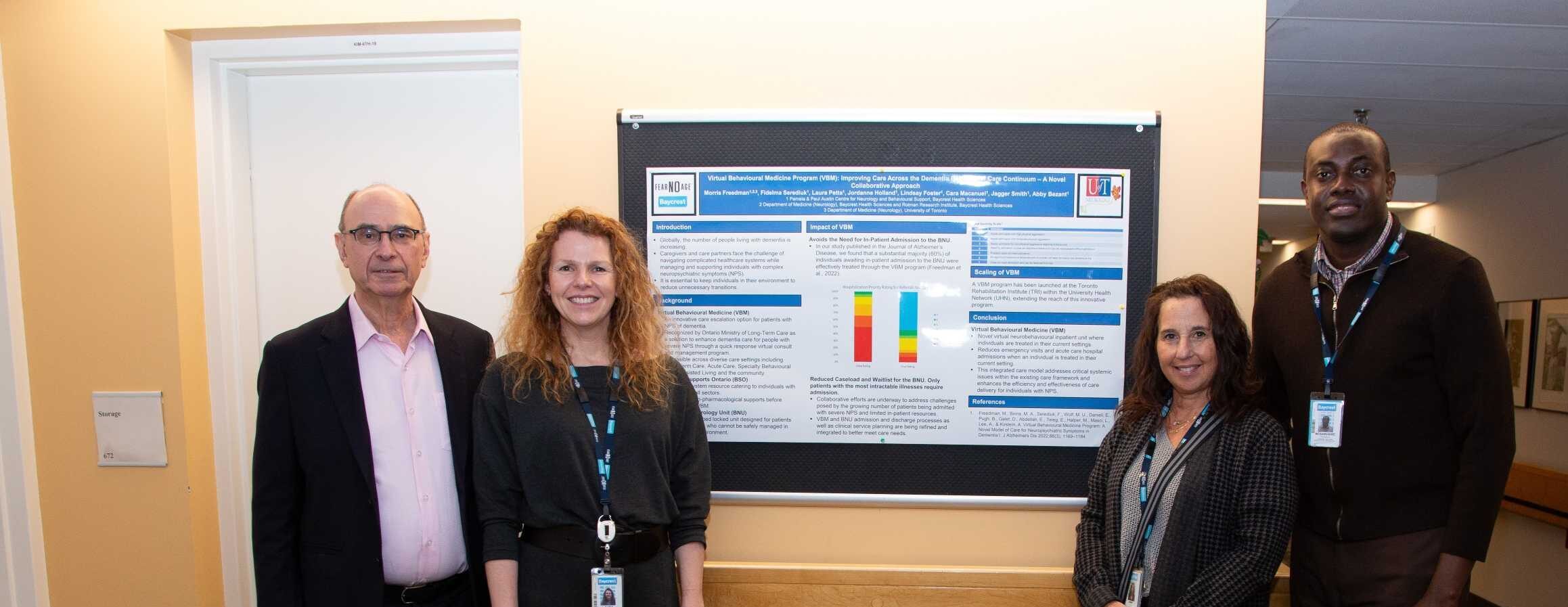
This program operates in collaboration with Behavioural Supports Ontario and the Toronto Rehabilitation Institute as part of the Pamela and Paul Austin Centre for Neurology and Behavioural Support.
Learn more
Before your appointment, you will be contacted by someone from Behavioural Supports Ontario to find out more information about your specific situation.
You will then receive an email with details about your appointment. The email will include the time and date of your appointment, how to prepare and a link to access the appointment. It’s good idea to test the link before the appointment.
You can expect your first appointment to last for one to two hours. Please be ready with a pen and paper to take notes.
You will speak with members of our team who will ask questions about the person living with dementia to perform an in-depth assessment. We will work with you to develop a care plan that will meet your needs. Care plans may include any of the following:
- Communication strategies such as distraction or reassurance
- Changes to the surroundings like adjusting the temperature or lighting
- Therapeutic or recreational activities
- Medication
Depending on your needs, we may recommend one or more 30-minute follow-up appointments.
- A computer or tablet with a secure internet connection
- All medications and supplements in their original bottles
- A list of questions you want to ask
- Any aids you use, such as hearing aids or glasses
- A friend or family member for support, if you choose
- A pen and paper to take notes
You will need a referral from a health-care provider to access our service.
Please send this VBM referral form (PDF) to [email protected] or fax to 647-788-4883.
If you are referring a client to both the VBM and admission to the Seniors Specialty Hospital Beds, then please fill and send this VBM and CASS referral form (PDF) to [email protected] or fax to 647-788-4883.
Referral criteria
- A diagnosis of dementia, where the primary concern is severe unmanaged neuropsychiatric symptoms of dementia such as agitation, physical expressions, or other severely disruptive or risky behaviour
- POA/SDM consent, as clients are likely incapable of making healthcare decisions
- Risk of harm to self and/or others due to behaviours associated with dementia
- Medically stable (with exceptions for clients referred while in acute care)
We also accept referrals for clients who are:
- Being considered for a tertiary specialized behaviour support bed (CASS bed)
- Transitioning to another sector/place of care where responsive behaviours may be a barrier to a successful transition
How quickly can someone be seen through the Virtual Behavioural Medicine Program?
VBM is designed for urgent situations. Once a referral is received, appointments are offered as quickly as possible to help manage behaviours that are causing risk or distress.
What types of behaviours does the VBM program help with?
We help manage behaviours that can put the person living with dementia and those around them at risk. This can include physical or verbal aggression, agitation or showing signs of paranoia.
What area does the VBM serve?
Because our team provides virtual care, we can see patients who are referred from anywhere in Ontario. We will work with the care and support teams that are local to the patient.
Contact
Hours
Monday to Friday
9 a.m. to 4:30 p.m.
For health professionals
See the clinic