
Hearing Aid Information
Hearing loss is common as we age, but the right hearing aids can make a meaningful difference. Modern devices not only help you hear more clearly, they also reconnect you to conversations, activities and your community.
The following information explains more about hearing aids and how they work.
Learn more about getting the most out of your hearing aid (PDF)
Hearing aid types
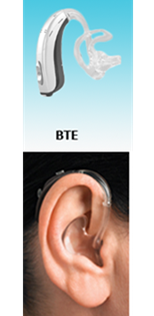
BTE hearing aids have a plastic casing that rests behind the ear and holds the device’s technology. A clear plastic tube then directs amplified sound into an earmold inside the ear canal.
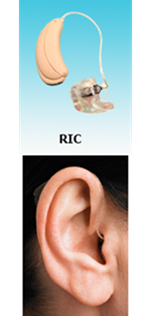
RIC hearing aids are small and discreet but may not be suitable for everyone. They can be fitted in the ear canal either with a custom-made eartip or a standard dome.
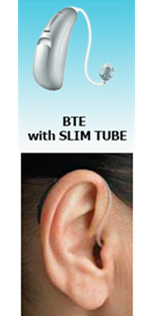
BTE hearing aids with slim tubes are more discreet than the standard BTE hearing aids with earmolds. They can be fitted into the ear canal either with a custom-made eartip or a standard dome.
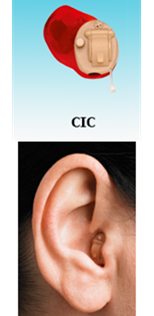
CIC hearing aids fit entirely in the ear canal. Only the head of a tiny plastic line that you use to remove the hearing aid shows above the canal.
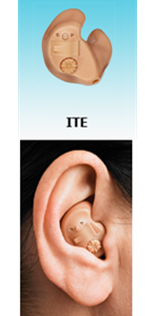
ITE hearing aids hold their technology in a custom-formed earmold that fits within the outer portion of the ear.
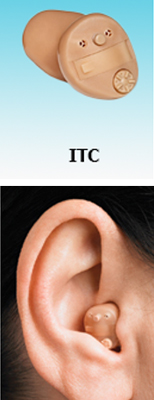
ITC hearing aids feature an earmold that fits down into the ear canal and a smaller part that faces out into the outer ear.
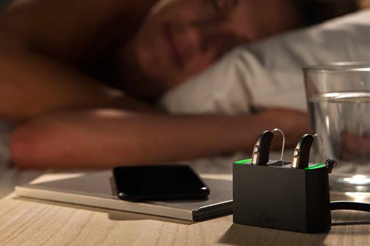
Rechargeable hearing aids are now available as an option for disposable batteries. Some hearing aids can use both disposable and rechargeable batteries, which can be convenient when travelling.
When you remove your hearing aids at night, place them into their charger to be ready to use the next day. The rechargeable batteries last approximately one year.
At this time, rechargeable hearing aids are only available in the receiver-in-the-ear and behind-the-ear styles.
Hearing aids for single-sided deafness
When you have one deaf ear that is not helped by hearing aids, you may hear well in some circumstances. One-to-one conversation in a quiet space is an example, or someone who is speaking on your better side. However, it can be harder to hear conversations on the side of your deaf ear.
One solution is to position yourself so your deaf ear is pointed away from whoever is speaking. But this is not always possible. Think about conversations around a boardroom table, while driving a car or in a group social situation. It can also be dangerous to cross the street with single-sided deafness.
However, there is help. Contralateral routing of the signal (CROS) hearing aids can pick up the sound on the deaf side and re-route it to the better hearing ear. They do not allow you to hear in your deaf ear itself, but they do allow you to hear sounds and conversations from that side.
And if you have hearing loss in your better ear, amplification can be provided through the hearing aid on that side to pick up of sound on the deaf side and amplify all sound on the better side. This arrangement is known as BICROS.
Hearing aid instructional videos
These videos can help you learn how to insert and remove the following types of hearing aids: